
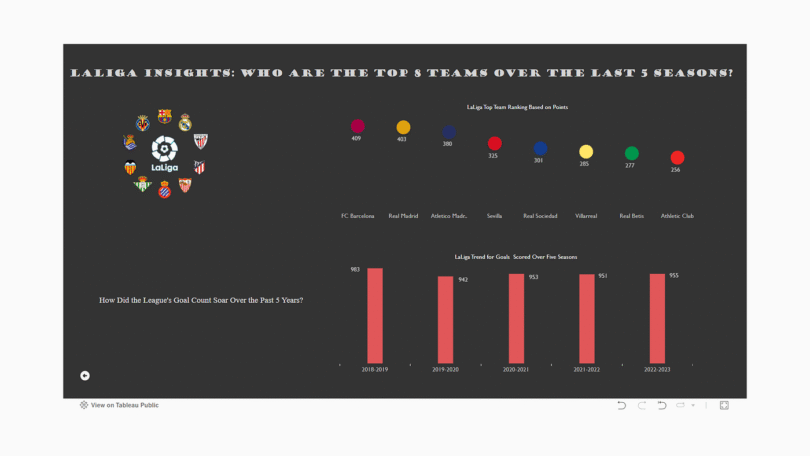

Comparing different La Liga seasons reveals how small tactical changes can accumulate into measurable statistical trends. The 2018/2019 season, in particular, emphasized pace, vertical transitions, and attacking variance compared to earlier years. Studying these shifts through expected goals (xG), possession, and shot creation statistics helps bettors and analysts adapt strategies that anticipate—not react to—market drift.
Why Year-on-Year Statistical Comparisons Matter
Football data evolves subtly across seasons; metrics rarely change dramatically but compound into trends that alter market logic. By cross-referencing the 2017/2018 and 2018/2019 La Liga campaigns, analysts observed measurable movements in pressing intensity and defensive compactness, both directly affecting total goals and corner probabilities. Predictive foresight comes from quantifying these gaps before bookmakers fully adjust.
Key Statistical Shifts Between 2017/2018 and 2018/2019
The following data summarizes how core La Liga trends evolved between consecutive seasons, showing where betting value potentially emerged.
| Metric | 2017/2018 | 2018/2019 | Differential | Interpretation |
| Average Goals per Game | 2.69 | 2.56 | -0.13 | Defenses adapted to mid-block systems |
| xG Differential per Match | 2.83 | 2.64 | -0.19 | Lower shooting volume due to fewer risky attacks |
| Average Corners | 9.6 | 9.9 | +0.3 | More wing-based buildup among mid-table teams |
| Possession for Top 4 | 61% | 58% | -3% | Redistribution of control, creating volatile matches |
| Shot Conversion Rate | 11.2% | 10.5% | -0.7% | Gradual efficiency decline across lower half sides |
The decline in shot efficiency and possession concentration reflected tactical decentralization across La Liga. In practical terms, markets relying on over-goal expectations and stable “favorite dominance” reduced yield consistency, demanding selective adaptation.
H3: Tactical Mechanisms Behind Statistical Shifts
Tactically, 2018/2019 marked the spread of mid-block pressing and quick full-back rotations. Clubs outside the elite pressed more selectively rather than maintaining open duels. This tactical moderation reduced the number of chaotic high-xG fixtures but increased secondary events such as rebounds and corners—a dynamic bettors could utilize in niche markets.
Identifying Market Delay in Recognizing Structural Change
Markets adjust slowly to these internal evolutions because surface-level results conceal deeper shifts. Early-season trends during 2018/2019 showed declining goal totals, yet odds for totals markets remained anchored to prior-year benchmarks for several weeks. Recognizing this timing window allowed data-driven bettors to profit before recalibration.
Integrating UFABET Analytical Tools for Cross-Season Patterns
In contexts where markets evolve yearly, referencing real-time comparative data through ufabet เข้าสู่ระบบ enriches consistency detection. The service’s integrated trend analytics visualize seasonal deltas—comparing consecutive-year averages in shot maps, pressing zones, and goal expectancy. By identifying systemic shifts before they manifest in price adjustments, users strengthen model-based selections while maintaining discipline against recency bias. These insights prove crucial when leveraging mismatch conditions in weekly La Liga lines.
Micro-Trends Emerging From Structural Adjustments
Trend mapping revealed several smaller developments during 2018/2019 that reshaped outcome likelihoods across markets:
- Increased counterattacking adoption reduced clean sheets by 4.3%.
- Right-sided build-up bias among mid-table teams raised corner ratios marginally.
- Tactical rotation by top-six squads inflated variance in expected goals per fixture.
- Substitutions involving advanced full-backs changed late-game tempo profiles.
Individually minor, these accumulative pivots separated success from stagnation for statistically aware bettors.
Evaluating Predictability Through casino online Data Ecosystems
To enhance cross-season evaluation, bettors examining aggregated prediction models within a casino online database gain additional orientation. These multidimensional dashboards compile inter-year correlations between xG deviations and probability movement across betting markets. By viewing La Liga’s 2018/2019 data beside its 2017/2018 precedent, anomaly filters expose where variance exceeded historical norms—particularly in short-term goal correction cycles. The comparative perspective empowers bettors to infer trajectory without assuming trend permanence, refining adaptive strategy within evolving datasets.
Limitations of Historical Comparisons
While cross-year reviews enhance orientation, they may overweight structural consistencies. Coaching turnovers and schedule compression alter competitive context, muting direct parallels. A data historian’s greatest challenge is differentiating actual systemic evolution from cyclical variance—a mistake common when small-sample fluctuations distort perceived stability.
Synthesizing Lessons for Continuous Trend Tracking
Each La Liga cycle carries new interaction effects between tactical evolution, market learning, and statistical normalization. Success depends less on memorizing numbers than interpreting their direction and volatility. Understanding when regression stabilizes helps determine if observed patterns signal permanent behavioral change or temporary adaptation.
Summary
Comparing La Liga 2017/2018 and 2018/2019 exposed a tactical regression from attacking fluidity toward controlled compactness, lowering goal expectancy but enriching secondary markets like corners and both-team scoring lines. Bettors attentive to timing, variance curves, and underpriced adjustments gained early advantage before the market absorbed these nuances. Continuous data comparison remains essential—not for prediction accuracy alone, but for anticipating when football behavior outpaces bookmaker memory.
