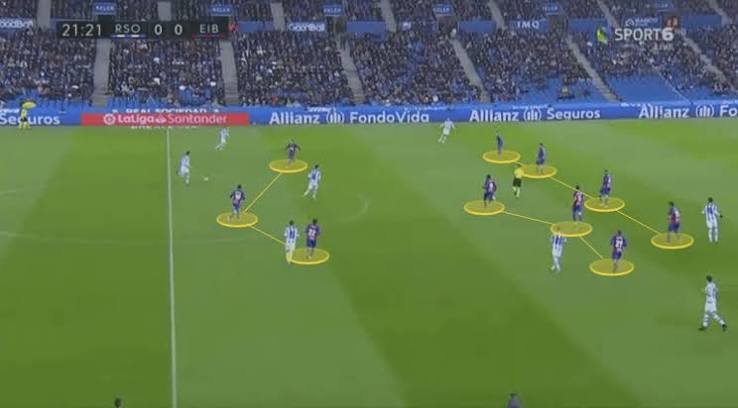

The 2013/2014 La Liga season is widely remembered for Atletico Madrid breaking the Barcelona-Real Madrid duopoly, but beneath the headline title race lay a profound structural shift in how space was manipulated. As central spaces became increasingly congested by low blocks and narrow defensive midfields, elite managers looked to the flanks not just for width, but as the primary engines for shot generation. The traditional defender role faded, giving rise to high-pressing, overlapping full-backs who functioned as auxiliary wingers. This tactical evolution fundamentally altered the metrics of offensive production, serving as the direct catalyst for increased shot volume and a dramatic rise in corner kick frequencies across the league.
The Overlap as a Tool for Numerical Superiority
When a full-back commits to an overlapping run, they instantly disrupt the defensive structure of the opposition by forcing a choice. In the 2013/2014 campaign, teams like Real Madrid utilized Daniel Carvajal and Marcelo to create overloads against rigid backlines. By sprinting past the inverted wingers who had drifted inside, these defenders forced opposing wide midfielders to track back deep into their own territory or compelled central defenders to shift out of position to cover the flank.
This movement consistently broke the first line of lateral defense. When the opposing full-back stepped out to engage the crossing threat, it vacated the half-space, allowing inside forwards room to receive the ball and unleash shots. The mere threat of the overlap stretched the defensive horizontal lines, creating massive gaps in the penalty box.
High Defensive Lines and the Generation of Corner Kicks
The positioning of full-backs high up the pitch directly correlated with where possession was lost and won. By pinning opposition wingers deep into their own half, attacking teams effectively compressed the playing field, trapping opponents within their own defensive third. When clearances were attempted by panicked defenses, these advanced full-backs were perfectly situated to intercept the ball, sustaining the wave of pressure.
This continuous territorial dominance meant that blocked crosses and deflected passes occurred deep in the final third. When a full-back hammered a low ball across the face of the goal or a high looping cross toward the far post, defending teams rarely had the body orientation to clear cleanly upfield. The safest defensive resort was frequently to turn the ball behind the goal line, resulting in a high volume of corner kicks for the attacking side.
Tactical Variance Between Low-Block Breaking and Counter-Attacking Systems
The utility of the attacking full-back was not uniform across La Liga; it adapted fluidly to a team’s core philosophy. For possession-heavy sides, full-backs acted as permanent outlets to recycling possession, constantly probing the edges of a low block until a gap emerged. For transitional sides, they were vertical weapons designed to exploit space before the opponent could organize.
The Asymmetric Deployment of Wide Defenders
In asymmetric systems, one full-back would act as a cautious cover defender while the other pushed aggressively into the final third. This was highly visible at Atletico Madrid, where Juanfran frequently pushed high on the right to combine with Koke, while Filipe Luis timed his movements on the left based on central space. This asymmetry allowed teams to overload one specific flank, drawing the entire defensive block toward that side before rapidly switching play to the isolated opposite winger, who then had a clear path to shoot or win a corner.
Quantifying the Creation of Shot Opportunities
To understand the sheer mathematical impact of these wide defenders during the 2013/2014 campaign, one must look at the specific avenues through which their actions translated into tangible offensive outputs. Full-backs were no longer just passing the ball to playmakers; they were delivering the final or penultimate pass before a shot attempt.
The following data demonstrates the typical tactical outcomes observed during regional matches when full-backs successfully penetrated the deep wide zones during this specific era of Spanish football:
| Full-Back Action Type | Primary Target Area | Probable Outcome (Shot %) | Probable Outcome (Corner %) |
| Low Cutback Pass | Penalty Spot / Edge of Box | 65% | 15% |
| Deep Whipped Cross | Six-Yard Box / Far Post | 25% | 55% |
| Early Diagonal Ball | In-behind Defensive Line | 40% | 20% |
| Isolated 1v1 Dribble | Inside Left/Right Channel | 35% | 45% |
Analyzing these figures reveals that the style of delivery dictated the defensive reaction. Low cutbacks heavily favored direct shots because central midfielders arriving late could meet the ball cleanly. Conversely, the traditional deep whipped cross was far more likely to result in a corner kick, as central defenders scrambled backward and preferred giving away a set-piece over risking an own-goal or a clean volley from an attacker.
Mechanical Breakdowns of the Low Cutback Versus Deep Cross
The Low Cutback Dynamics
The low cutback required the full-back to reach the endline before passing backward against the grain of the retreating defensive line. Because the defenders were running toward their own goal, they could not easily adjust their body weight to intercept a ball moving backward toward the penalty spot. This mechanic created high-quality, uncontested shots for oncoming central attackers.
The Deep Cross Dynamics
The deep cross was delivered from a deeper, wider position, usually before the full-back reached the penalty box line. This gave the defensive unit a split second longer to read the flight of the ball. Because the ball spent more time in the air, physical duels in the box intensified, leading to a high percentage of deflections off heads and shoulders that drifted out of play for corners.
How Opposition Adjustments Limited Wide Productivity
As the 2013/2014 season progressed, opposing managers began adjusting their defensive schemes specifically to neutralize the influence of elite full-backs. The most common counter-strategy was the implementation of a strict “double-up” defensive policy on the flanks, where the wide midfielder was explicitly tasked with tracking the full-back’s runs, sacrificing their own counter-attacking positioning.
When done effectively, this adjustment forced full-backs to cross from deeper, less dangerous positions or compelled them to pass backwards into crowded central areas. This suffocated the space required to generate high-quality cross-driven shots, reducing the efficiency of the attacking system and forcing teams to rely heavily on central individual brilliance rather than structured wide overloads.
Analytical Application in Modern Sports Forecasting
Understanding these historical tactical shifts provides critical data points for analysts evaluating modern football matches. When assessing how a team will perform against a disciplined defensive unit, studying the structural involvement of the wide defenders offers far more predictive accuracy than merely looking at past goal tallies.
Serious analysts looking to quantify these match variables often track live metrics through advanced sports betting services. Assuming a match features an asymmetric system where a dominant home team utilizes highly aggressive overlapping full-backs against a notorious low-block opponent, the statistical probability of high corner counts skyrockets. Examining live tactical adjustments via the ทางเข้า ufabet168 betting interface allows savvy observers to recognize when a manager instructs their full-backs to stop crossing and start cutting inside, signaling an immediate shift in value from corner markets to total shot markets.
Environmental Factors and System Failures in Wide Attacks
While the attacking full-back system yielded high offensive rewards, it carried immense systemic risks that could cause the entire tactical framework to collapse. The most obvious point of failure was the exposure of the space left directly behind the advancing defender, leaving central center-backs completely isolated against fast counter-attacks.
If a team lacked disciplined defensive midfielders capable of dropping into the vacated fullback spots, a single misplaced pass in the final third transformed an offensive cross into a catastrophic defensive emergency. Furthermore, pitch dimensions and weather played a significant role; narrower pitches naturally restricted the space full-backs needed to build momentum, drastically reducing their ability to generate corners or shots.
Strategic Adaptations Across Alternative Gaming and Analytical Landscapes
The logical principles governing space, risk management, and tactical forecasting are not exclusive to the football pitch. Just as a football manager must weigh the offensive benefits of an overlapping run against the risk of a counter-attack, individuals engaging with strategic mathematical models must constantly evaluate risk-to-reward ratios based on structural shifts.
Those who study high-variance outcomes across complex data sets often find structural similarities when analyzing recreational gaming metrics. For instance, individuals exploring the volatile mathematical distributions found on a premium casino online website must practice the same analytical discipline as a football scout. Success in both fields relies entirely on identifying consistent structural patterns, managing resources through fluctuating periods, and understanding when an established trend is about to shift due to environmental changes.
Summary
The 2013/2014 La Liga season demonstrated that attacking full-backs were not merely luxury players, but fundamental tactical engines capable of dictating shot volume and set-piece creation. By creating numerical overloads, forcing panicking defenses into conceding corner kicks, and adapting to defensive adjustments, these wide defenders redefined modern positional play. Ultimately, understanding the mechanics of how full-backs manipulate wide spaces remains essential for any accurate analysis of footballing outcomes, proving that the flanks are often the shortest route to central success.