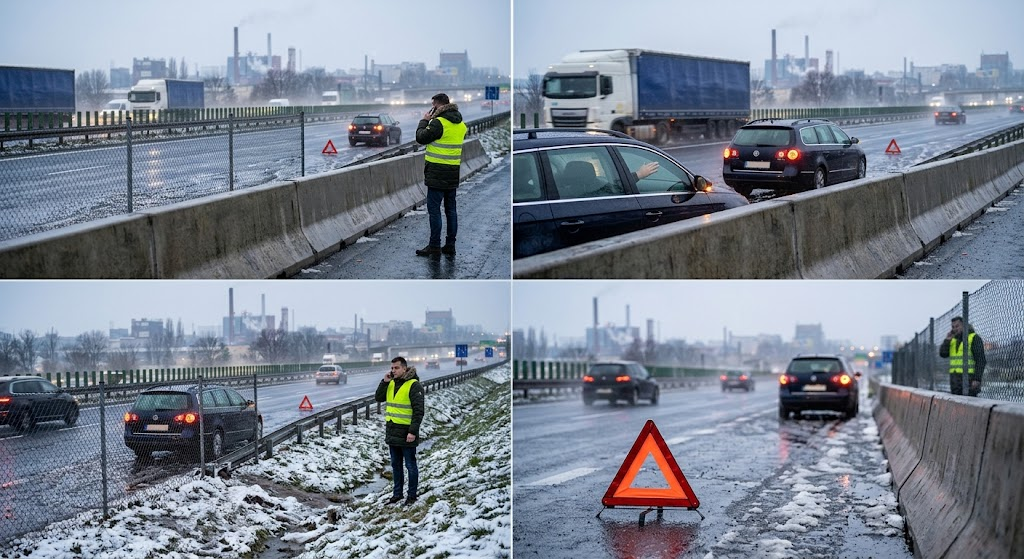
A vehicle breakdown is stressful under normal circumstances, but bad weather can make the situation much more dangerous. Heavy rain, snowfall, freezing temperatures, strong winds, and reduced visibility can turn an ordinary roadside problem into a serious safety concern. Drivers may find themselves stranded on a busy road, unable to continue their journey while waiting for professional assistance.
In Katowice and the surrounding areas, changing weather conditions can affect driving safety throughout the year. Knowing how to respond when your car stops working can help protect you, your passengers, and other road users. The most important priorities are finding a safe position, making your vehicle visible, and contacting a suitable roadside assistance provider.
This guide explains the precautions drivers should take during a weather-related breakdown and how to prepare for the arrival of professional help.
1. Move to a Safe Location Whenever Possible
The first priority after a breakdown is to get away from moving traffic if you can do so safely. If the vehicle still responds normally and there are no signs of a serious mechanical or electrical problem, move towards a suitable parking area, service station, or designated stopping place.
On a motorway or expressway, use the emergency lane only when necessary and stop as far from moving traffic as circumstances safely allow. Avoid stopping immediately after a bend, near the crest of a hill, or in another location where approaching drivers may have difficulty seeing you.
If the vehicle cannot be moved, switch on the hazard warning lights when appropriate. Keep your attention on surrounding traffic and avoid attempting repairs in an exposed position beside fast-moving vehicles.
Never risk a dangerous manoeuvre simply to reach a more convenient location. If moving the car would create additional danger, remain focused on protecting yourself and obtaining assistance.
2. Make Yourself and Your Vehicle Visible
Bad weather often reduces the distance at which other drivers can see a stationary vehicle. Rain can create spray, fog can obscure road markings, and snow may make it difficult to distinguish a car from the surrounding environment.
Switch on your hazard lights to warn approaching drivers that your vehicle is stationary. If conditions are dark or visibility is poor, use the vehicle’s lighting as appropriate and follow the relevant road-safety requirements.
A reflective warning triangle may also be required or appropriate in certain situations. Place it only when you can do so safely and in accordance with local regulations. Never walk into active traffic or cross a motorway to position a warning device.
Wear a high-visibility vest if you need to leave the vehicle and have one available. Keep your movements predictable and avoid standing behind the car, where another vehicle could strike it.
Visibility is especially important on wet or icy roads because drivers may need additional distance to recognise a hazard and stop safely.
3. Decide Whether to Stay Inside or Leave the Vehicle
The safest place to wait depends on the location, weather, traffic, and condition of the vehicle. There is no single rule that applies to every breakdown.
If you are stopped in a dangerous traffic location, remaining inside with your seat belt fastened may be safer than standing beside the vehicle. However, if the car is in a relatively safe position away from moving traffic and there is a safer place to wait nearby, leaving the vehicle may be appropriate.
On motorways, follow official road-safety guidance and move behind a suitable safety barrier when it is safe to do so. Do not stand between the vehicle and passing traffic.
In severe weather, avoid leaving the car simply to inspect a tyre or engine problem in an exposed location. If you are uncertain, contact emergency services when there is immediate danger and follow their instructions.
Children, older passengers, and people with mobility difficulties may need additional assistance. Plan how to move everyone to safety before opening the doors or stepping into traffic.
4. Protect Yourself During Heavy Rain and Flooding
Heavy rainfall can make roadside conditions unpredictable. Water may collect in low-lying areas, cover road edges, and conceal potholes or other hazards.
If your car stops during a downpour, avoid standing in deep water or attempting to inspect the underside of the vehicle. Water can hide damaged surfaces, open drains, and other dangers.
Never attempt to drive through floodwater when its depth, current, or road condition is uncertain. Water can affect vehicle stability and damage electrical or mechanical components. If rising water threatens your location, prioritise evacuation to safer ground when possible and contact emergency services if you are in danger.
When requesting roadside help, provide your exact location and explain whether the car is in standing water, on a flooded road, or near a waterlogged roadside. These details help the service assess the conditions before dispatching assistance.
If visibility is extremely poor, remain alert for other vehicles approaching the breakdown area and avoid unnecessary movement outside the car.
5. Stay Warm During Snowfall and Freezing Temperatures
A winter breakdown can become uncomfortable or dangerous when temperatures fall below freezing. A failed engine may leave you without normal cabin heating, and waiting outdoors can expose you to cold, wind, and wet clothing.
Keep suitable winter clothing, gloves, blankets, and a charged mobile phone in the vehicle during colder months. These basic supplies can be especially valuable if assistance takes longer to arrive because of snow or difficult road conditions.
If the vehicle is safely positioned and you need to run the engine for warmth, first ensure that the exhaust pipe is clear of snow or other obstructions. Never run the engine in an enclosed space, such as a closed garage, because exhaust gases can cause fatal carbon monoxide poisoning. If you notice exhaust fumes inside the cabin or feel unusually dizzy, weak, or confused, switch off the engine if safe and seek urgent help.
Use heating cautiously and monitor the vehicle’s condition. If the engine has overheated, there is a fuel smell, or another serious fault is suspected, do not keep running it simply to stay warm.
6. Contact Roadside Assistance and Explain the Conditions
Once you are in the safest available position, contact a suitable roadside assistance provider. Explain what happened, where the vehicle is located, and whether the weather creates additional difficulties.
When searching for pomoc drogowa Katowice 24h, confirm that the provider can assist at your location and ask about the expected arrival time. Twenty-four-hour availability does not necessarily mean immediate arrival, particularly during heavy snowfall, storms, or periods of unusually high demand.
Give clear location details, such as the road name, direction of travel, nearby exit, kilometre marker, or recognisable landmark. If your phone supports location sharing, this may help the operator identify the vehicle more accurately.
Describe the problem as clearly as possible. Mention whether the engine will start, whether a tyre is damaged, whether the vehicle is blocking traffic, or whether there are warning lights or unusual smells.
If the car is carrying children, pets, or passengers who require special assistance, mention this when appropriate. Accurate information allows the provider to plan the recovery more effectively.
7. Avoid Dangerous Roadside Repairs
Bad weather is not the time to attempt complicated roadside repairs without the right equipment or a safe working area. Changing a tyre beside fast-moving traffic, inspecting electrical components in heavy rain, or crawling beneath a vehicle on an icy surface can expose you to unnecessary risks.
If the breakdown involves smoke, a fuel leak, a damaged high-voltage system, or signs of fire, move away from the danger when safe and contact emergency services. Do not touch exposed electrical components or attempt to investigate a potentially hazardous leak.
For electric and hybrid vehicles, follow the manufacturer’s instructions and tell the recovery operator which type of vehicle you have. Damaged batteries and high-voltage systems may require specialist handling.
A professional recovery team can assess whether the vehicle needs a repair, a tyre service, or transportation to a workshop. Your safety should take priority over saving a few minutes by attempting an improvised repair.
8. Prepare an Emergency Kit Before Your Next Journey
Preparation can make a breakdown much easier to manage. Consider keeping the following items in your car:
- A reflective vest and suitable warning equipment.
- A phone charger or power bank.
- A first-aid kit and basic emergency supplies.
- Warm clothing and a blanket during winter.
- Drinking water and non-perishable snacks for longer journeys.
- A torch with working batteries.
- Essential vehicle and roadside assistance contact information.
Before travelling in severe weather, check the forecast, fuel or battery level, tyre condition, and general vehicle condition. Allow extra travel time and avoid unnecessary journeys when authorities advise against travelling.
A little preparation can reduce stress and help you make safer decisions if your vehicle unexpectedly stops.
Conclusion
A breakdown in bad weather requires calm decisions and a clear focus on safety. Move away from traffic when possible, make the vehicle visible, avoid dangerous roadside repairs, and protect yourself from rain, cold, and other environmental hazards. If the situation becomes immediately dangerous, contact emergency services rather than relying solely on a routine recovery service.
When arranging pomoc drogowa Katowice 24h, provide accurate location details and explain the weather conditions, vehicle problems, and any special safety concerns. Confirm the service arrangements and wait in the safest available place until professional help arrives.
With sensible preparation and the right response, drivers can manage unexpected breakdowns more safely and reduce the risks associated with roadside emergencies.