
Every winter, fashion announces that something is back.
Sometimes it’s a colour. Sometimes it’s a silhouette that was supposedly finished five years ago. And sometimes it’s a sweater that looks suspiciously like the one your father has been wearing since 2008.
The funny thing is that most people don’t replace their entire wardrobe every winter. They buy a few pieces, pull last year’s clothes out of storage, and try to make everything work together.
Which is probably a healthier way to approach trends anyway.
For winter 2026, the interesting changes aren’t necessarily about completely new garments. They’re happening in the details: how knitwear is constructed, how trousers fall, how textures interact and how familiar colours are being worn differently.
Here are the directions worth paying attention to.
Texture Is Doing the Work That Prints Used To
There is something satisfying about a sweater that doesn’t need a graphic to look interesting.
Cable knits, ribs, waffle structures and brushed surfaces give relatively simple garments their own character. A plain-coloured sweater can look entirely different depending on how the yarn is knitted.
This is particularly relevant for people who prefer understated clothing but don’t want everything to look like another basic.
Texture also changes the way an outfit looks and moves. A ribbed cardigan creates lines across the body. A cable-knit pullover has more visual depth. A smooth, fine-gauge knit can look cleaner and more formal.
The distinction is not simply decorative. Different knit structures can affect stretch, weight, drape and how a garment holds its shape.
In Pakistan, this gives brands an opportunity to make winter clothing more interesting without relying entirely on loud colours or graphics. Attir’s recent knitwear direction reflects this approach, moving between ribbed, cable and chunky constructions. Pieces like its classic cable-knit pullover show how texture can give an otherwise familiar silhouette a completely different character.
Sometimes the most interesting part of a garment is the surface.
Brown Has Become Much More Than a Neutral
Black, grey and navy aren’t going anywhere. But brown has been making a convincing case for becoming the colour people reach for just as often.
Not one particular brown, either.
There’s chocolate, espresso, camel, tobacco, cinnamon and mocha. Some are warm and reddish. Others are cooler and almost grey. Together, they create a palette that works particularly well with winter textures.
A mocha sweater with washed blue denim feels different from the same sweater worn with cream trousers. A chocolate jacket over black can look surprisingly sharp. Camel knitwear can soften an outfit built around darker colours.
What makes these shades useful is that they don’t demand an entirely new wardrobe.
They’re easy to introduce gradually, especially through knitwear.
There is also something interesting about how brown behaves across different fabrics. In a smooth jersey, it can look understated; in a ribbed or chunky knit, the same shade develops more depth. Attir’s Rib-knit Cardigan Sweater one example of how a familiar neutral can become more interesting through the choice of material rather than additional design details.
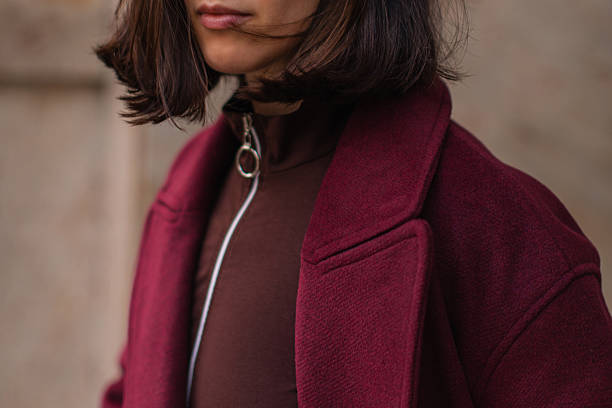
And while brown has dominated much of the conversation around recent winter dressing, it isn’t the only colour worth watching. Burgundy, deeper reds and unexpected brighter accents are also giving otherwise restrained wardrobes a little more personality.
The Return of Clothes With Shape
Oversized clothing has been around long enough that calling it a trend feels slightly strange.
But the conversation around fit is changing.
Instead of simply making everything wider, designers are paying closer attention to where the volume sits. A relaxed sweater might have a wider body but a shorter length. A trouser can be generous through the thigh and still have a controlled hem. A jacket may have broader shoulders without becoming unnecessarily long.
These differences sound small until you wear the clothes.
A relaxed silhouette works best when the proportions feel intentional. Otherwise, it can look like someone simply bought the wrong size.
This is where pattern making becomes especially important. A garment designed to be oversized isn’t necessarily the same as a regular-fit garment produced two sizes larger.
The shoulder, armhole, sleeve, body length and overall balance all contribute to the final shape.
For anyone shopping this winter, it’s worth looking beyond the fit label. Relaxed, loose and oversized can mean very different things between brands.
The Cardigan Is No Longer Just the Sensible Option
For a long time, cardigans had a reputation for being practical rather than exciting.
They were what you wore to the office when the air-conditioning was too cold. Or something that belonged in a school uniform.
Now the cardigan has become a more expressive piece of clothing.
Cropped proportions, heavier ribs, contrasting buttons, relaxed fits and different collar constructions have moved it beyond its traditional role.
It also solves a real problem with winter dressing: changing temperatures.
A cardigan can be worn open, buttoned or layered underneath outerwear. Unlike a pullover, it can be adjusted without pulling the entire garment over your head.
That versatility is especially useful in Pakistani cities where a cold morning can turn into a surprisingly comfortable afternoon.
For anyone considering a first knitwear purchase this season, a well-fitting cardigan is worth looking at before automatically choosing another crewneck. Attir’s women’s cardigan collection offers another way to explore the category beyond conventional pullovers.
The Quarter-Zip Is Having Its Moment
Some garments sit between categories, and that’s often what makes them useful.
The quarter-zip is one of them.
It has some of the familiarity of a sweatshirt, but the collar and zip give it a slightly more structured appearance. In knitted form, it can lean towards smart-casual dressing. In fleece or jersey, it feels more athletic.
That makes it easy to wear with denim, chinos or relaxed trousers.
The neckline is also practical. Zip it up when it’s cold, leave it open when you don’t need the coverage.
There is a reason brands continue experimenting with this format. Small changes in fabric, collar height and silhouette can produce noticeably different results. Attir’s broader men’s winter collection explores this space through knitted sweaters, quarter-zip sweatshirts and other casual winter layers.
Perhaps the Real Trend Is Buying More Carefully
One of the more useful developments in fashion is the growing interest in clothes that can be worn in several ways.
This doesn’t mean every purchase needs to be a plain white shirt or a black sweater. Personal style still needs some personality.
It means thinking about how a new piece will work with what you already own.
A textured cardigan is more useful when it works with three pairs of trousers. A jacket becomes a better purchase when it can be worn over different layers. A statement colour is easier to justify when it complements the rest of your wardrobe.
Trends are useful for discovering possibilities. They shouldn’t become instructions.
And perhaps that’s the best way to approach winter 2026. Pay attention to the new shapes, colours and textures, but don’t feel obligated to adopt all of them.
The most interesting winter wardrobe probably isn’t the one that follows every trend.
It’s the one that knows which trends to ignore.