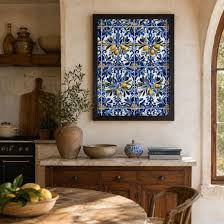

Portugal’s centuries old painted tile tradition has spent most of its life on church facades and old town walls, and lately it’s been turning up somewhere considerably less expected, on scarves, dresses, and accessory prints from designers clearly drawing direct inspiration from those blue and white patterns. It’s the kind of regional detail that a good estate agent in the Algarve will happily point out to a visiting client on a slow afternoon between viewings, a small piece of local culture that has nothing to do with property and everything to do with why people fall for the region.
Why This Pattern Translates So Well Onto Fabric
Azulejo patterns were built for repetition from the start, tiles designed to interlock seamlessly across a wall or facade, which happens to be exactly the kind of geometric repeat that works beautifully on a printed fabric too. The classic blue and white colourway photographs cleanly and reads as effortlessly put together rather than busy, even when the pattern itself is genuinely intricate up close.
Where the Print Actually Works Best
A scarf or headwrap carrying this pattern does more visual work than trying to wear it across an entire outfit, letting the intricate geometry stay the clear focal point rather than competing with itself. A single statement piece against otherwise simple, solid clothing lets the print read as considered rather than overwhelming.
Colour Variations Beyond the Expected Blue
While blue and white dominates most people’s mental image of azulejo, traditional patterns also appear in warm yellows and greens, versions that suit a slightly different wardrobe than the classic blue toned pieces. Seeking these warmer variations out gives you a way into the trend that feels a little less obvious than the version everyone else is already wearing.
Buying the Real Thing Versus a Generic Print
Plenty of fast fashion has borrowed loosely from this aesthetic without much genuine connection to it, while a handful of Portuguese designers and small ateliers produce pieces using patterns drawn directly from historic tile designs, sometimes even working with the same ceramicists who make the actual tiles. Seeking out the latter costs more and genuinely supports a craft tradition rather than a diluted copy of it.
Pairing It Without Looking Costume Like
The trick to wearing this pattern well is keeping everything else genuinely simple, neutral linen, unfussy silhouettes, letting the print carry the visual interest entirely on its own rather than competing with additional patterns or heavy accessories.
A Trend Rooted in Something Real
Unlike plenty of fashion trends that borrow an aesthetic without much substance behind it, this one connects to a genuine, living craft tradition still practiced by working ceramicists across Portugal, which gives it a depth that a purely manufactured print trend usually lacks.